︎︎︎THE GOLDEN MAUSOLEUM
GEORGI TENEV, IVANA NENCHEVA, NATALIYA LENZ
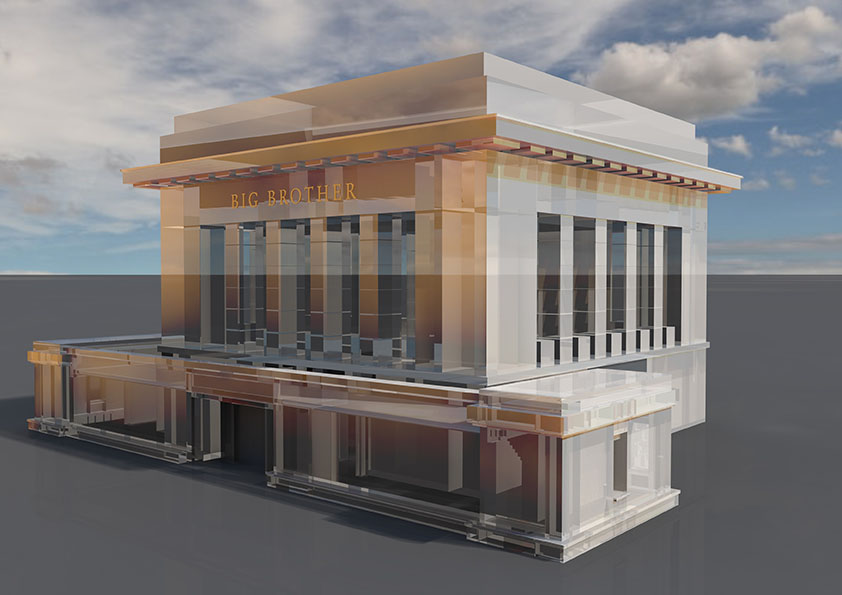
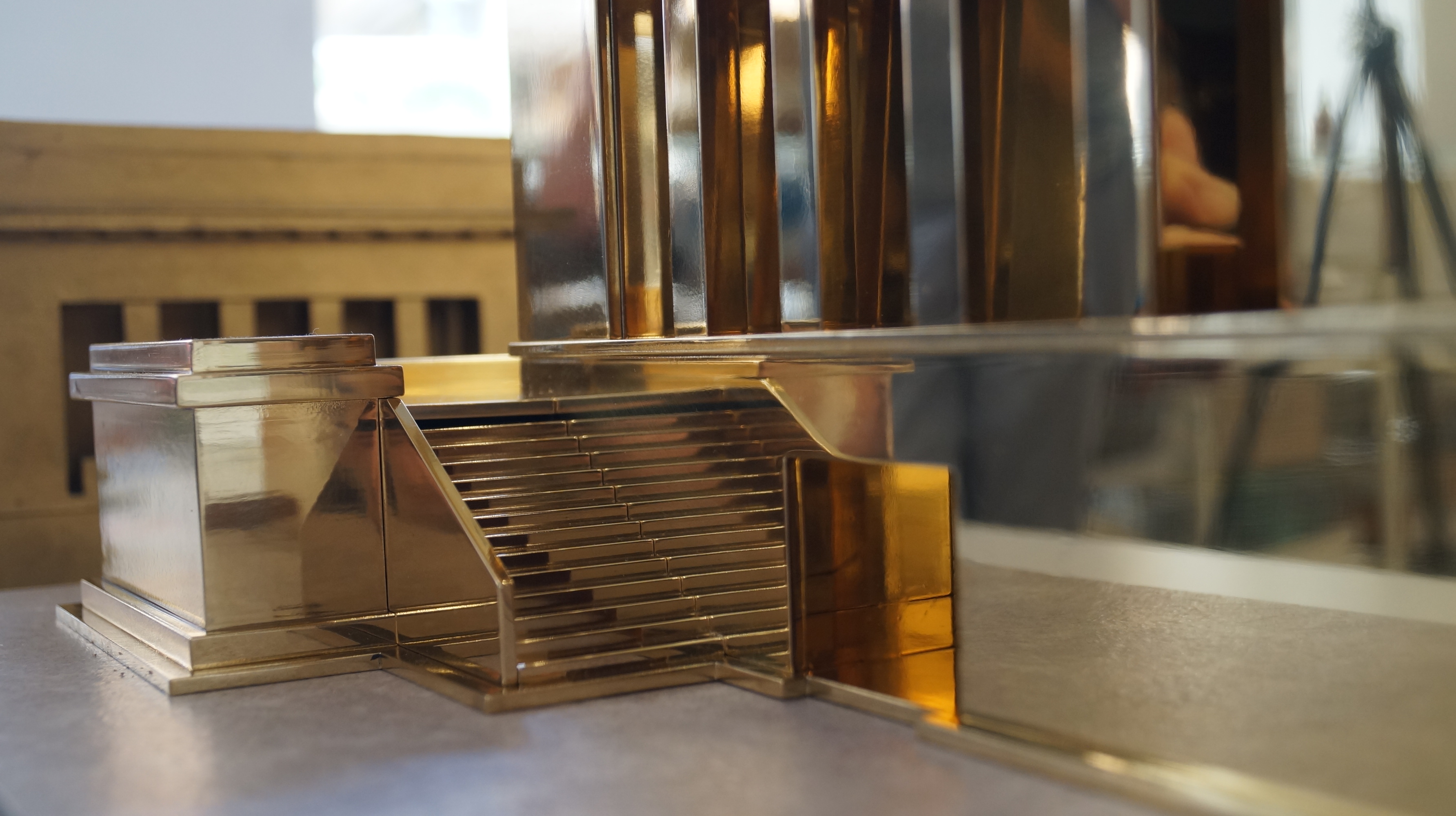
POLISHED BRASS, GLASS, A CRYSTAL CAPSULE WITH 24-CARAT GOLD IN BALM
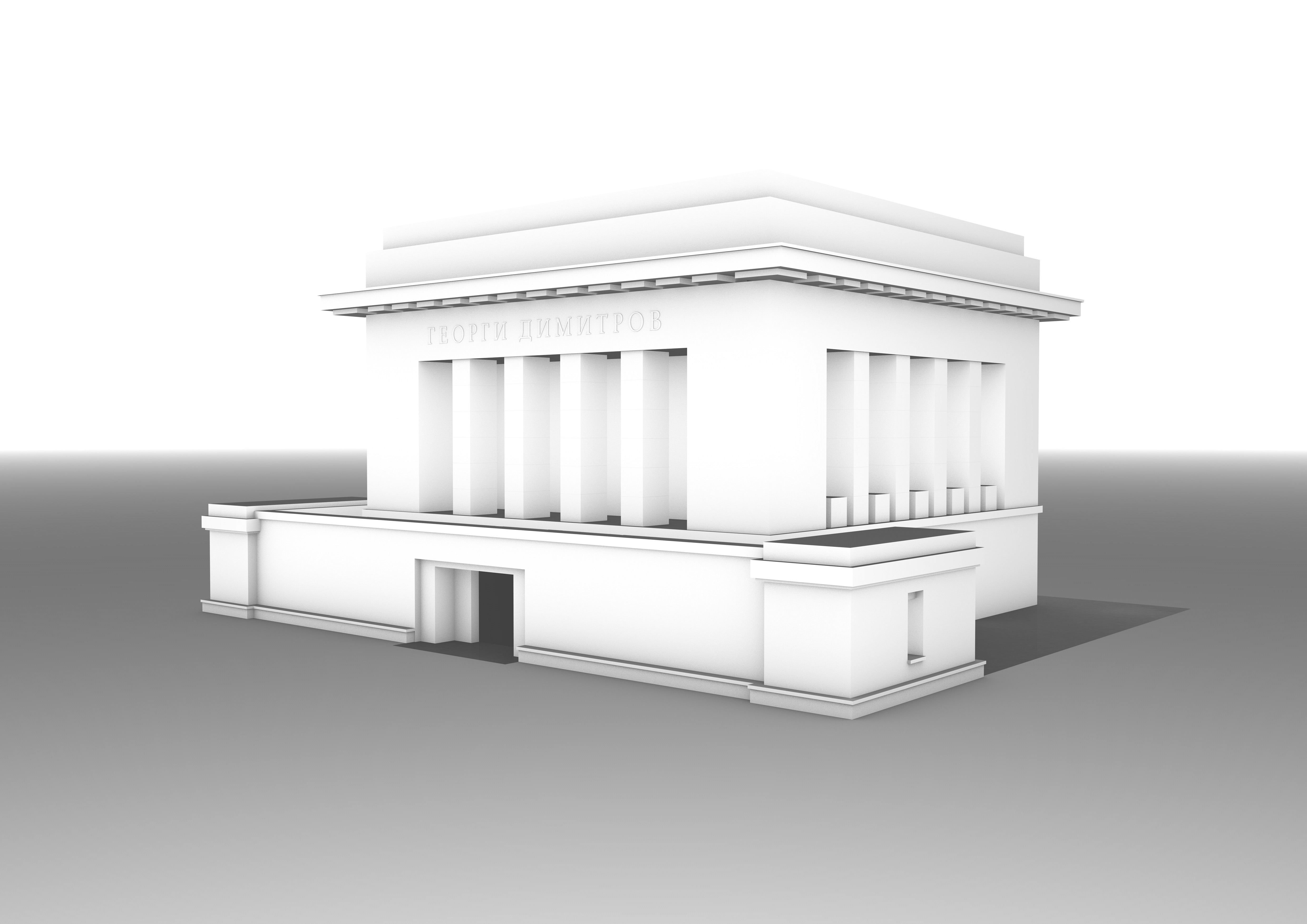
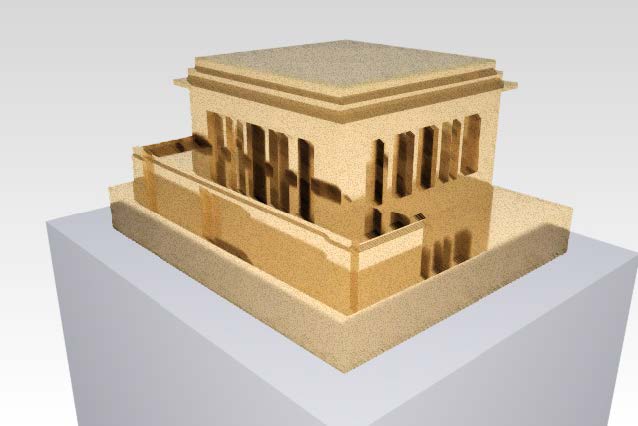
Exact execution to scale of the model of the Mausoleum in Sofia (1949-1999), designed by Arch. Georgi Ovcharov
Team: Atanas Konstantinov, eng. Anton Bakalov, Georgi Lyutibrodski-Gars
The project ‘Golden Mausoleum’ was made possible thanks to the American Foundation in Bulgaria.
It is an illusion that totalitarian
communism was atheistic. On the contrary, it built his own cult fused with
mysticism. In it, by analogy with religious traditions, there were physical
actions with symbolic essence. There were cult places. The visualization of the
cult was filled with specific rituality. The MAUSOLEUM was the most objective
manifestation of the totalitarian cult. It was a place of sanctity, of ritual,
which connected the past, the present and the future of the ideology. The
MAUSOLEUM was a promise of intransience – the eternal memory of a person,
eternal life beyond physical transience.
It is an illusion that the totalitarian period can easily and irrevocably pass. In order for the totalitarianism to be overcome, it must be replaced by something different. The genetic information of the totalitarian principle is not easily erased, it is a program of relationships that is being constantly reproduced.
When one idea dominates all other ideas,
this is totalitarianism. When a person only obeys themselves, and not the
general laws, this is totalitarianism. Totalitarianism is an ideology bordering
on religious relations. The emptying of the symbolic center, the destruction of
the Mausoleum (in 1999) as the citadel of ideological power, does not guarantee
the destruction of the spirit of totalitarianism. An ideology must be replaced
by a different idea, another meaning.
The two systems – the ideological and
utopian, pseudo-religious scheme of communism, with a perfectly organized equal
society, and the other one, the market one, the system of direct values and
universal commercial exchange, give birth to similar phenomena in terms of
human nature as a biological being and an intimate person.
The MAUSOLEUM has the tendency to be
restored – symbolically speaking, as the highest symbolic center in the
hierarchy. The empty space of ideas and ideologies never remains empty. Even
without an image, it is already occupied by something. What is the focus, the
ideological center of our society?

Part ‘Forest’
When a story interpolates fact and legend, it becomes a tale. And tales are often more alive and interesting than real life.
When a story interpolates fact and legend, it becomes a tale. And tales are often more alive and interesting than real life.
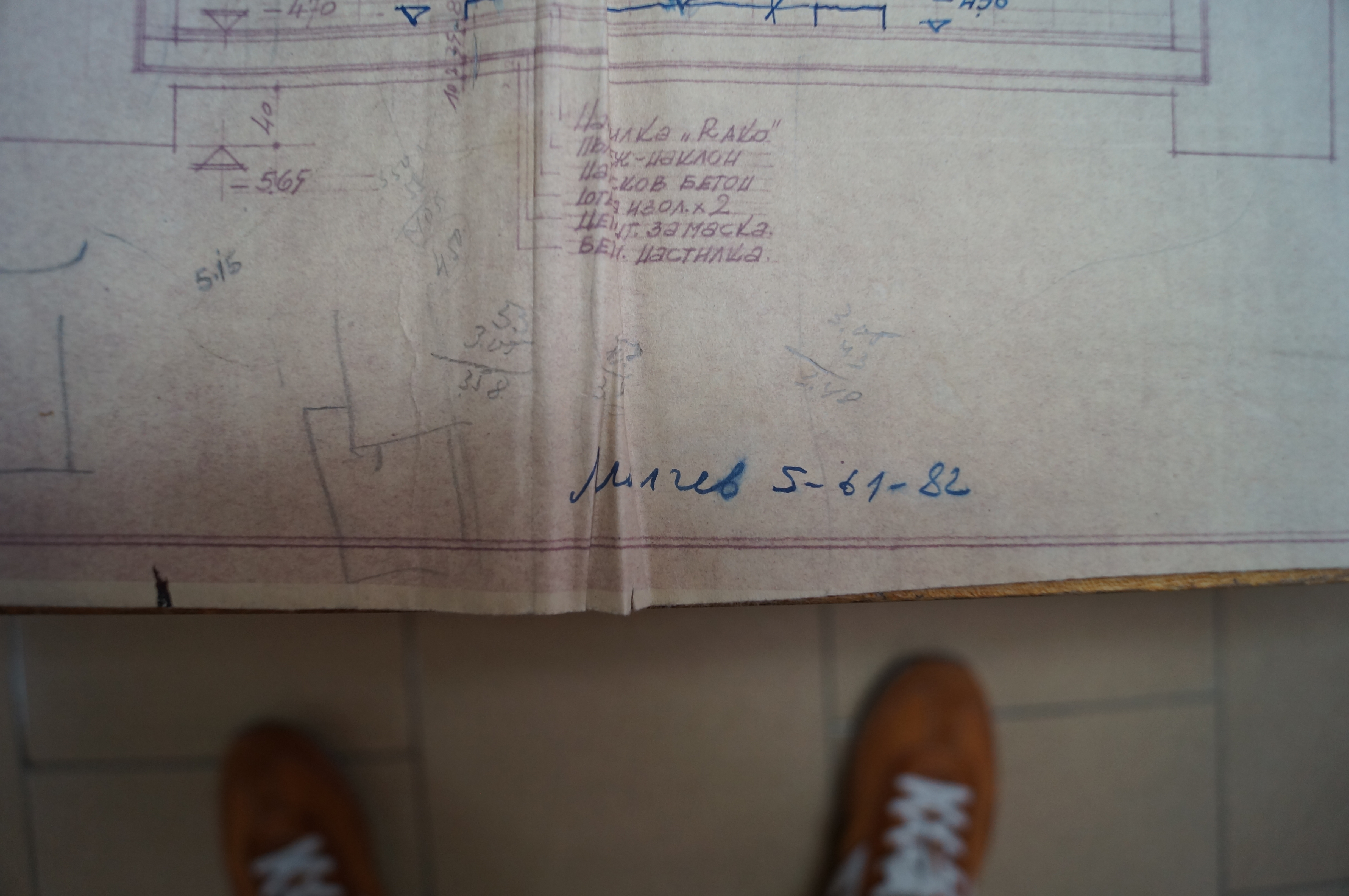
In this story, legend and truth become enmeshed. This is a tale about a builder, artist and architect. He was an excellent architect, a friend of the Tsar. But now, he serves time in prison, incarcerated in a labor camp... He was sentenced by the new political regime. But even as a prisoner, he remained an architect, an artist. He would see imperfect buildings and would re-build them in thought. He would look up at the sky to see ornaments in the clouds. He would touch the trees and see columns - his favourite Doric columns, to be specific. The architect smokes. And oftentimes, being a prisoner means he would smoke often and desparately. The cigarettes remain one of the few links to his former life. The old habit. As those in power now wishing to become kings themselves asked to have new buildings - as beautiful as the old ones - they called the Tsar’s favourite architect. They would tell him, ‘Sketch a palace, a tomb, an eternal home for our great ruler. Create for us a gravestone and a temple for his body to rest forever and for people to cherish his memory. Do work quickly, you should begin immediately. Our ruler died, yet we have no tomb to bury him in.

The architect as always would hold onto a square pack of cigarettes. And on the spot he began scribbling on the box. And thus, the important building adopted a squared shape from the very beginning, resembling the architect’s carton cigarette case. And of course, the tomb was to have a myriad of intricately detailed columns that the architect so loved.
The hero of this tale really lived once. The artist and architect is Georgi Ovcharov. The tale was told to me by another architect, half a century after Georgi had passed away. The newly constructed white building. The tomb temple. The mauseleum in the centre of the city.
Part ‘INTRO’
More than a decade ago, architect Slavey Galabov told me this story. He himself comes from the age right after the one in which architect Georgi Ovcharov lived and feels a great respect towards the latter’s talent as an innovator in Bulgarian architecture. And thus, at the end of the 1990s, 46 years after Ovcharov’s death, the key Bulgarian urbanists find themselves facing a professional, moral and humanist problem: to give ideas about the future of the noew empty Mausoleum of Georgi Dimitrov. One of the most famous creations of Georgi Ovcharov. A building lacking analogy not only in Bulgaria but across the whole of Europe.


Part ‘K1’
I’m flicking through the pages of newspapers from the 1990s.
I’m flicking through the pages of newspapers from the 1990s.
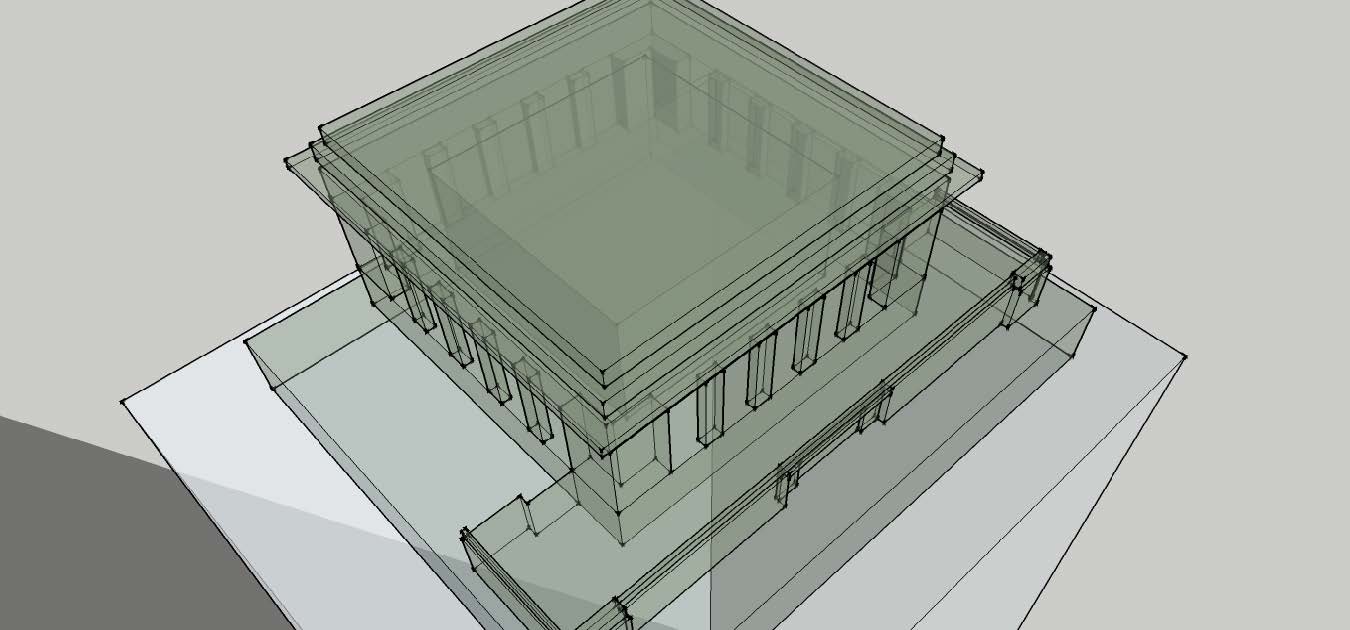
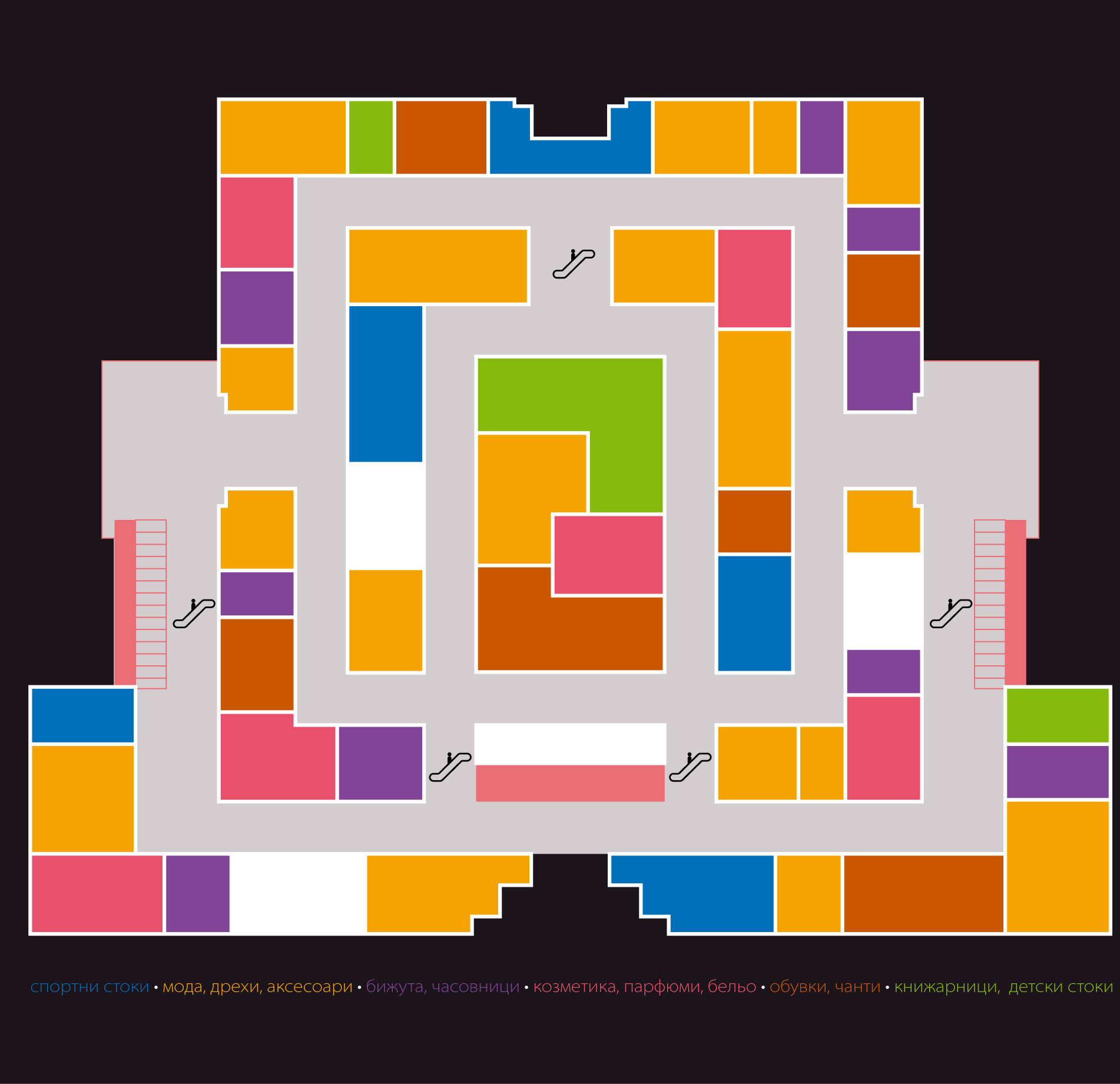
It’s doubtful that anyone may remember the announcement of a competition. One of the selected projects is precisely that of architect Slavey Galabov. He preserves the building’s appearance, façade, shape. The Mausoleum’s silhouette will not disappear from the city, but its interior is entirely redeveloped. Most importantly, the northwestern wing has been entirely separated, extends forward towards the square, its windows allowing the eyes of passersby to see a space which had previously not seen the sunlight.
Other architects have also created their own versions of this symbolic ritualistic object, such as Dimitar Krastev and Aleksander Naydenov who wins the 1990’s competition.
These suggestions remain undeveloped, becoming tangents within the legend and parts of the story.

Nothing in the Mausoleum’s story is a coincidence. The architect’s biography could be taken as an example. The person chosen to create Dimitrov’s tomb lived through controversial events. He was surely not a supporter of the communist regime. In addition to working on important administrative buildings prior to the revolution, George Ovcharov was welcome in the Palace and was accepted by the Royal family. This must have been the reason why immediately after September 9th, he was sentenced to months in prison. The legendary story about the beginning of the Mausoleum project is not entirely truthful but communicates the essence of the times. According to her, Ovcharov was freed from serving time in the camp in order to create the building’s sketches.
Goergi Tenev (b. 1969) is an author, playwright and script-writer. He is the creator of conceptual projects which make use of archives, individual memory and XXth century political history. Writes and records portraits of contemporary visual artists.
© History in Between, 2025This project is part of the Cultural Calendar of Sofia, Ministry of Culture and Sofia History Museum.
Connect:
︎ ︎ ︎
„История помежду“ ("Проект за музейни намеси в РИМ, София") е съвместен проект между Фондация „Изкуство – Дела и Документи“ и Регионален исторически музей, София, подкрепен Календар на културните събития на Столична Община.
History in Between (Project for interventions in the Museum, Sofia) is a collaboration between the Art Foundation - Affairs and Documents, and the Regional History Museum of Sofia. It is supported by the Calendar of Cultural Events of Sofia City.